Connecting Through Compassion: Dementia Communication Tips

Caring for a loved one living with dementia is a journey filled with profound love, yet often accompanied by unique and sometimes challenging communication hurdles. As the vibrant summer sun shines across Ontario, reminding us of warmth and connection, we at Filipino Homecare understand that maintaining meaningful interactions with someone experiencing cognitive decline is paramount for their well-being and your peace of mind.
It's natural to feel overwhelmed or unsure how to best connect when your loved one's ability to communicate changes. You are not alone. At Filipino Homecare, we believe that effective communication is at the heart of compassionate care. Our dedicated Filipino caregivers, renowned for their inherent malasakit (heartfelt caring), are extensively trained in strategies that foster understanding, reduce frustration, and preserve dignity for individuals living with dementia. We're here to share some of these valuable tips, offering reassurance and practical guidance for families across Ontario, from Hamilton to Ottawa, Mississauga to Barrie.
The Foundation of Connection: Patience and Empathy
The most crucial aspect of communicating with someone with dementia is remembering that their communication difficulties are a symptom of the disease, not a deliberate choice. This understanding forms the bedrock of all successful interactions.
- Embrace Their Reality: Instead of correcting or arguing, try to enter their world. If they believe it's 1980, respond within that context. Validating their feelings, even if the facts are skewed, builds trust and reduces anxiety.
- Deep Listening: Pay attention not just to their words, but to their tone, body language, and emotions. Sometimes, what they're truly trying to express isn't verbal.
- Be Present: Give them your full attention. Put away distractions. A calm, focused presence communicates respect and love.
Practical Communication Strategies for Daily Interactions
1. Simplify Your Language
Keep sentences short, simple, and direct. Avoid complex questions or abstract concepts.
- One Idea at a Time: Instead of, "Do you want to wear your blue shirt, or the red one, and then maybe we can go for a walk if it's not too hot?" try, "Here's your blue shirt." Pause. "Let's put this on." Then later, "Would you like to go for a walk?"
- Use Concrete Nouns: Refer to specific objects rather than pronouns. "Would you like this apple?" instead of "Would you like that?"
- Offer Choices, But Limit Them: Two clear options are usually best. "Do you want juice or water?" rather than "What would you like to drink?"
2. Harness the Power of Non-Verbal Cues
As verbal communication declines, non-verbal cues become even more vital.
- Warm Body Language: Approach from the front, smile, make gentle eye contact. Your calm demeanor can be incredibly reassuring.
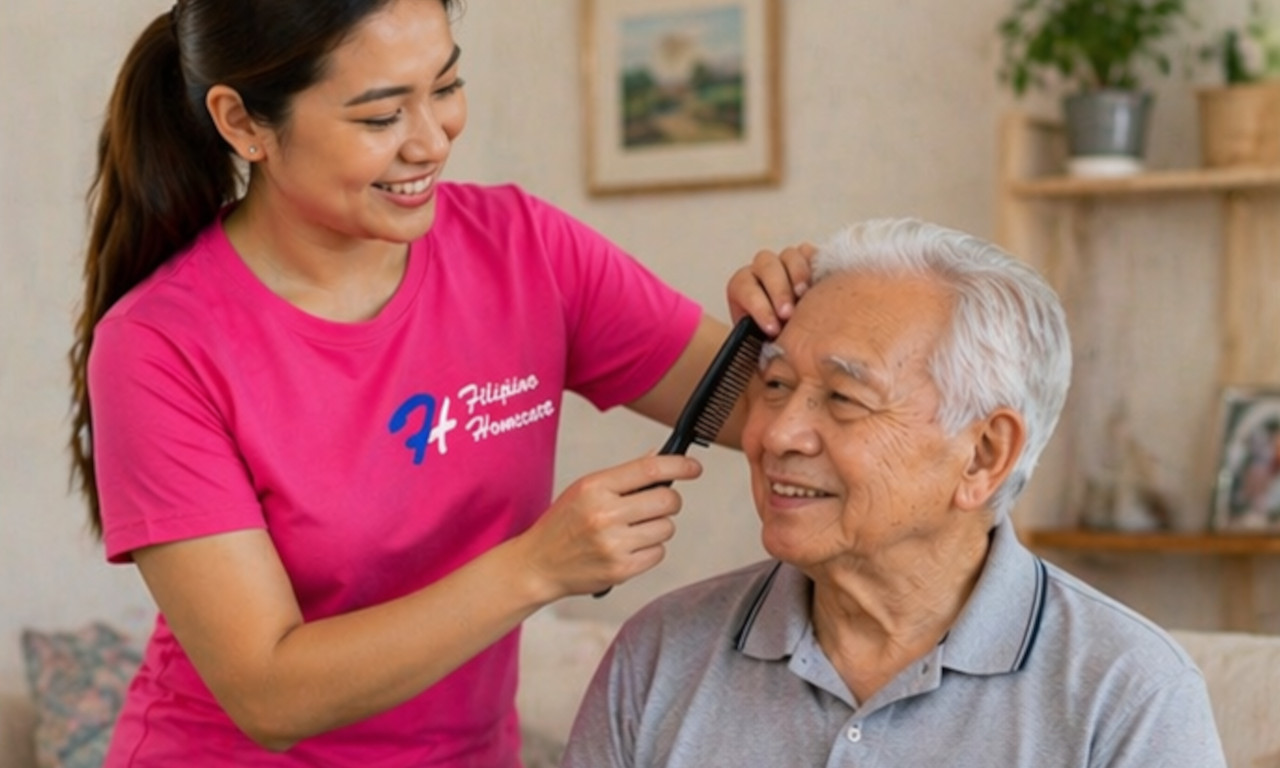
- Gentle Touch: A comforting hand on their arm or shoulder can convey warmth and security, especially during personal care tasks where verbal instructions might be difficult. Our Filipino caregivers excel in providing personal care with a respectful, gentle touch.
- Mirroring: Subtly matching their posture or expression can create a sense of connection.
3. Create a Supportive Environment
The physical environment plays a significant role in communication and overall well-being.
- Minimize Distractions: Turn off the TV or radio when trying to communicate. A quiet space helps them focus.
- Adequate Lighting: Good lighting reduces shadows that can be misinterpreted or cause anxiety.
- Familiarity and Routine: A predictable daily routine, which our caregivers help establish, can provide a sense of security and reduce confusion, making communication easier. This is particularly helpful in summer, when activities like meal prep and hydration need to be consistently managed.
4. Address Repetitive Questions with Grace
Repetitive questions are common and can test anyone's patience. Remember, they are often a sign of anxiety or a need for reassurance.
- Respond Patiently: Answer the question as if it's the first time it's been asked. Your calm response is what matters most.
- Redirect Gently: After answering, try to gently redirect their attention to another activity or topic. "Yes, we're having chicken for dinner. Look at this beautiful flower in the garden."
- Memory Aids: Visual cues like a whiteboard with the day's schedule or a familiar photo album can sometimes help.
5. Leverage Sensory Engagement (Summer Edition!)
Engaging the senses can open new avenues for connection, especially during the vibrant summer months.
- Music: Play their favorite music from their youth. Music often bypasses cognitive barriers and can evoke positive memories and emotions.
- Nature's Touch: As Ontario basks in the summer sun, consider gentle outdoor activities. A supervised walk in a shaded park, feeling the warm breeze, or smelling fresh flowers can provide calming sensory input. This is also a perfect opportunity to ensure proper hydration with refreshing drinks, a key focus for our caregivers during meal prep and companionship.
- Familiar Objects: Show them old photos, a cherished blanket, or a favorite trinket. These can spark a connection, even if they can't articulate the memory.
How Filipino Homecare Can Support Your Family
We understand that navigating dementia care is a continuous learning process, and it can be incredibly demanding for family caregivers. Filipino Homecare is here to lighten your load and provide expert support with genuine malasakit.
- Expert Dementia Care: Our compassionate Filipino caregivers are trained in specialized dementia care techniques, ensuring your loved one receives understanding and patient support, including all the communication strategies mentioned above.
- Companionship: Beyond tasks, our caregivers provide meaningful companionship, engaging in activities that stimulate and comfort, fostering connection through shared moments.
- Personal Care with Dignity: From bathing to dressing, our caregivers handle personal care needs with the utmost respect and sensitivity, using gentle communication to ensure comfort and cooperation.
- Respite Care: Need a break to recharge and perhaps reconnect with other family members? Our respite care services offer families peace of mind, knowing their loved one is in capable and caring hands.
- Overnight & 24-Hour Care: For advanced needs, we provide continuous support, ensuring consistent communication and care around the clock.
- Comprehensive Support: Whether it's post-hospital support, meal prep, or even specialized nursing care and palliative care, our team adapts to your family's unique needs. We also support families managing their care through Family Managed Home Care (FMHC).
At Filipino Homecare, we are proudly BBB accredited, reflecting our commitment to excellence and trustworthiness. Our services extend across Ontario, including key areas like Hamilton, Burlington, Oakville, Mississauga, Toronto, Barrie, and Ottawa. We are dedicated to bringing high-quality, culturally sensitive care right to your home.
You Are Not Alone
It's normal to feel stressed and worried when caring for a loved one with dementia. Remember to be patient with yourself, too. Every day is different, and some days will be harder than others. By applying these communication tips and embracing the support of compassionate professionals, you can continue to foster a loving and connected relationship with your family member.
Let Filipino Homecare be your partner in this journey. Our caregivers embody the spirit of malasakit, offering not just assistance, but genuine heartfelt caring. We are here to help you navigate the complexities of dementia care with confidence and compassion, ensuring your loved one lives their best life.
Ready to explore how Filipino Homecare can bring peace of mind and expert care to your family? Don't hesitate to reach out. Call us today at 905-929-7322 or visit our website at filipinohomecare.ca to learn more about our services across Ontario.
Compassionate Care for Your Loved One
Speak with our care coordinator to design a home care plan that fits your family.
Call 905-929-7322